25 AUG 2026

At Contact, we believe trust starts with transparency. As we introduce AI into our tools and ways of working, we want our people to know when AI is involved, what role it plays, and where human judgement remains essential.
That’s why clear labelling of AI-generated content and AI-supported interactions is a core design principle across our AI solutions.
Two examples of this approach are High Vis Docs and Āwhina.
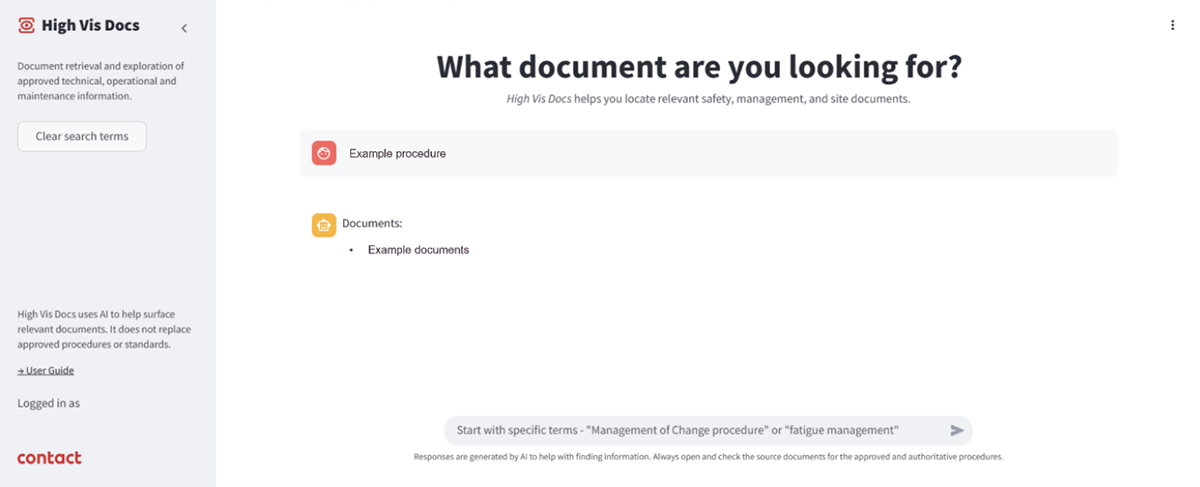
High Vis Docs helps our people quickly find approved safety, management and site documentation from a library containing thousands of organisational documents. By making that knowledge easier to find and understand, the tool reduces reliance on key individuals and keeps critical information accessible to the people who need it. Employees can ask questions in natural language and receive AI-generated summaries alongside links to relevant source documents.
From the moment users enter the service, they are clearly informed they are interacting with an AI-powered service. Every response is labelled as AI-generated, and every answer links to the original source documents, allowing users to review the full context, verify information and apply their own judgement. High Vis Docs is built to support, not replace, responsible decision-making.
By making trusted information easier and faster to find, High Vis Docs helps accelerate day-to-day work, while clear labelling keeps users aware of when they are interacting with AI. This transparency supports trust, accountability, and responsible use of AI at Contact.
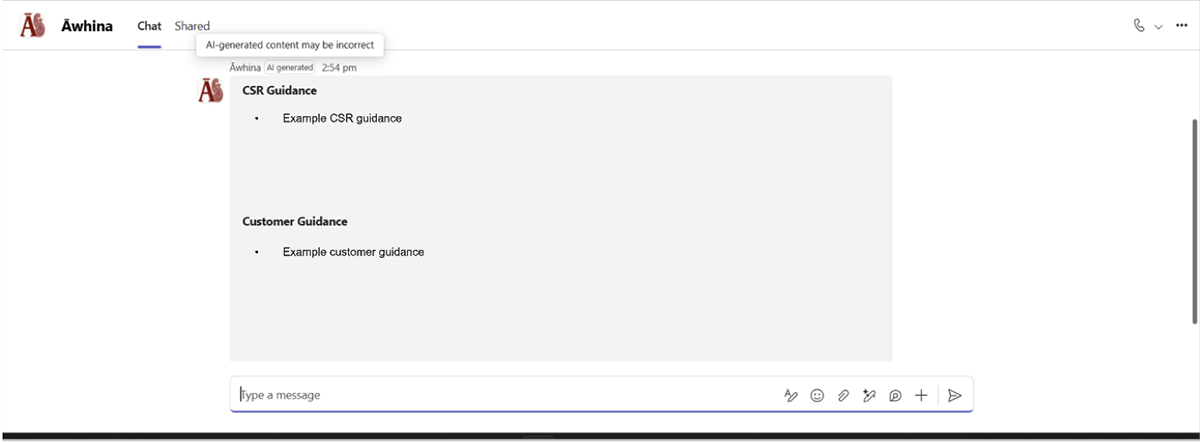
Āwhina, named after the Te Reo Māori word for helpfulness and support, is an AI chatbot designed to help Customer teams access information from their internal knowledge base. Instead of manually searching through multiple pages, employees can ask a question and receive a customer-friendly response, process guidance, information on relevant alerts and links to source content.
Āwhina searches and summarises approved internal knowledge sources, including information about Contact's products, services, processes, and standards. The tool does not access or use customer information, customer records, or personally identifiable information. Its purpose is simply to help employees navigate existing organisational knowledge more efficiently.
Just like High Vis Docs, transparency is built into the experience from the start. Users are clearly informed they are engaging with an AI chatbot, not a person, so they understand the nature of the interaction and how responses are generated.
Āwhina provides AI-generated answers based on approved knowledge sources and directs users back to the original content through links. It also clearly communicates its limitations, including the possibility of a delay between content updates and when that updated information becomes available through the chatbot.
By being transparent about what the tool does, how it works and where information comes from, Āwhina helps employees use AI responsibly while maintaining trust, accountability, and strong customer outcomes.
Alongside clear labelling within our AI tools, we provide employees with guidance and training on the responsible use of AI. This helps people understand each tool’s purpose, its limitations and the role of human judgement, ensuring AI supports decision-making rather than replacing it.
Equally important is how that information is presented. By clearly identifying AI-powered interactions, labelling AI-generated content, providing access to source material and reinforcing the role of human judgement, Contact helps people understand when AI is assisting them, and where accountability remains.
This keeps humans in the loop. Employees benefit from the speed and efficiency of AI while still reviewing source information, applying their expertise and making informed decisions based on the context in front of them. AI supports the work, but people remain responsible for the outcome.
The result is faster access to knowledge, greater trust in AI-enabled tools, stronger accountability and more confident adoption of AI across the business. For us, responsible AI means making the technology visible, not invisible, so people stay in control, make informed decisions and realise the benefits of AI in a way that is transparent, trustworthy and human-centred.


For independent complaint or pricing advice, UDL, Billy & Powerswitch can help.
Read our Residential Consumer Care policy on how we'll keep you safe and connected.