We rely on Aotearoa New Zealand’s natural resources including freshwater and geothermal resources to generate electricity. We take our responsibility to care for these natural resources seriously, not just in the interests of our own business but to ensure future generations of New Zealanders can enjoy them too. It’s all about balance and we’re working to maintain that every day.
Our goal is to protect, enhance, and restore areas of indigenous biodiversity in and around our sites – in line with our tikanga and our commitment to creating a better Aotearoa New Zealand.
That means we seek to minimise any direct impacts our operations may have on biodiversity. And we proactively look for areas on Contact-owned whenua to protect and revegetate with indigenous species to enhance biodiversity corridors across the areas we operate.
More information about biodiversity management, impacts and actions can be found on our Biodiversity Management and ESG Reporting webpage.
Our operations can sometimes impact water, rivers, birds, animals, and plant life. Each region is unique, so we have site-specific management plans for local biodiversity, which we develop by engaging with neighbours, environmental groups, tangata whenua and local councils.
We also look for opportunities to partner with and support other landowners, tangata whenua and community groups to further protect biodiversity on land Contact does not own. We do this by supporting environmental education, providing financial contributions, and through on-the-ground mahi and partnership projects.
For more information on our community mahi, see our communities webpage.

In some cases, impacts on biodiversity, eg. site clearance, may endure over the life of our consents, and are somewhat irreversible unless we cease our operations. In some cases, there are enhancement actions, eg. wetland restoration, that can be taken at other locations to balance those impacts. We need to keep the lights on for New Zealanders while at the same time doing our best to minimise any impacts.
We conduct location-specific biodiversity assessments for all proposed projects, which give us a good understanding of any impacts on biodiversity. Please refer to an example of a biodiversity assessment here. Under the Assessment of Environmental Effects framework we identify and quantify any effects on local species or ecosystems. We focus on the mitigation hierarchy under the Resource Management Act to avoid, minimise, remedy or offset our impact and we work with stakeholders to develop options to improve those species’ chance of survival for future generations to enjoy.
Our eel (tuna) transfer programme at Roxburgh dam is a good example of one such project in action. Young eel (or elver) make their way up purpose-built ramps at the dam, where we relocate them above the dam throughout the Clutha Mata-Au. We also give adult eel the helping hand they need to migrate out to the Pacific Ocean. See how the eel transfer programme works in this video.
The operation of geothermal assets can cause changes to surface temperatures and therefore affects the dispersion of habitats appropriate for geothermal vegetation. Contact undertakes regular monitoring of surface features, temperatures, and geothermal vegetation to help understand our impacts. We have committed funding through the Wairakei Environmental Mitigation Charitable Trust (WEMCT) to proactively control pest plants within geothermal vegetation sites and protect these areas of biodiversity.
Other activities include:
Information on our pest eradication and tree planting statistics, as well as our IUCN* Red List species, is available in our Integrated Report
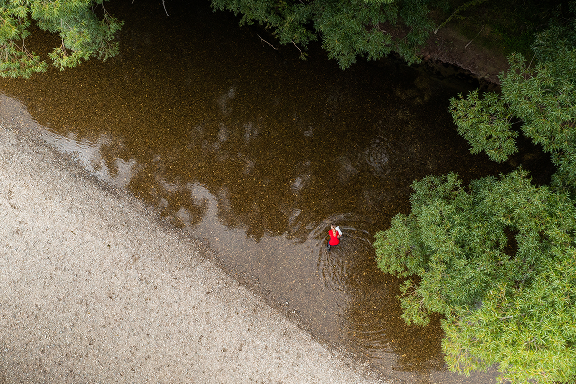
We do not operate in National Parks or cut down mature indigenous forest across any of our operations. In situations where vegetation clearance is necessary, we adhere to New Zealand Government policies and rehabilitate these areas with indigenous species or offset any unavoidable permanent clearance (such as relocating access roads to less-sensitive areas).
Contact will not operate in World Heritage Sites or IUCN (International Union for Conservation of Nature) Category I-IV protected areas, and we expect our suppliers, partners, and other stakeholders to adopt a similar position.
Contact’s freehold land is used for a number of activities including power stations and steamfields and also additional land that is leased as farm land or used for community purposes such as Pony Clubs and Riding for Development in Taupo.
We continuously review our land use to identify whether there is a better use of the land which has lower environmental and biodiversity impacts, including retiring highly erodible or less profitable areas of land from farming and planting these with indigenous vegetation.

Terrestrial ecological health and freshwater ecological health are material topics for Contact, under our broader focus on biodiversity and nature.
We are strengthening our approach to nature, informed by the Taskforce on Nature-related Financial Disclosures (TNFD) and its Locate, Evaluate, Assess and Prepare (LEAP) approach, as we work to better understand our relationship with nature and contribute to addressing biodiversity loss and water stewardship.
As part of this work, we are progressively assessing nature-related impacts and dependencies across our operational asset portfolio using a location-specific approach. The assessment considers our interactions with terrestrial and freshwater ecosystems, including the key drivers through which our activities may impact nature, alongside our dependencies on nature and ecosystem services. This builds on our existing environmental assessments, biodiversity management practices and understanding, while providing a more consistent approach for identifying and evaluating how our operations interact with and depend on nature.
The findings will help us identify where our most material interactions with nature occur, better understand the potential risks associated with our impacts and dependencies, and prioritise where further assessment and action should be focused. Over time, this will inform our approach to restoration and the prioritisation of future nature investment.
At Contact, we deliver great value, products, and service. We innovate based on customer feedback to shape the future.

We're committed to preserving natural resources for future generations of Kiwis, maintaining balance every day.
We've always got courageous and clever projects on the go to help generate renewable energy and manage our long-term impacts.


For independent complaint or pricing advice, UDL, Billy & Powerswitch can help.
Read our Residential Consumer Care policy on how we'll keep you safe and connected.